Why We Charge Before We Build, and Why the First Call Is Free
Why McDowell doesn't give free quotes, what the free discovery call covers, and what an Opinion of Probable Cost tells you that a square metre rate can't.
Most builders will quote your job for nothing. Ring around on a Tuesday and you can have three numbers by Friday, none of them the same, and no way of telling which one is real.
McDowell Building & Construction doesn’t work that way. When someone lands on our site and sees a paid step early in the process, the fair question is what they’re paying for, so this is the straight answer.
The first conversation is free and always will be. What’s paid for is the work of properly costing your project. Those are two different things, and most of the confusion sits in the gap between them.
What a free quote actually costs you
The question worth asking about any free quote is how much work actually went into it.
Is someone genuinely looking into the job to get accurate costings, or is it a ballpark? There is only so much detail anyone can put into something they are not being paid for. That isn’t a criticism of the builder. It’s arithmetic.
“Costs blow out from poor detail, not from the job itself. Whatever wasn’t looked at properly up front turns up later as a variation.”
Patrick McDowell, Registered Building Practitioner
That is the whole argument in two sentences. The number is not the problem. What the number was based on is the problem. A figure produced without anyone measuring the site, checking what’s behind the walls, confirming what council will allow or pricing the actual trades holds up right until the work starts.
The homeowners who get hurt by free quotes are rarely the ones who were overcharged. They’re the ones who accepted the lowest number, committed, and then found out what wasn’t in it.
The first call is free, and it’s a real conversation
Every McDowell project starts with a free 20 minute discovery call. No fee, no commitment, and it isn’t a sales pitch.
It exists to work out three things: what you’re actually trying to do, whether it’s the kind of work McDowell takes on, and what the sensible next step is. One of the most useful outcomes of that call is establishing early that a project won’t work in its current form, before anyone has spent money finding that out the hard way.
Budget comes up, and it’s worth being upfront about why. A homeowner with $50,000 and a full extension brief will find out eventually. Finding out in a 20 minute phone call costs nothing. Finding out after paying for drawings costs a great deal.
After that call there are three honest outcomes. The project moves to an Opinion of Probable Cost, it’s developed enough to go straight to a Pre-Construction Agreement, or McDowell isn’t the right fit for it. All three are useful answers.
Why a square metre rate tells you almost nothing
Ask around for building costs and someone will give you a rate per square metre. It sounds like useful information. It mostly isn’t.
“A square metre rate tells you how big the job is. It doesn’t tell you what the job is.”
Patrick McDowell
Consider what a rate per square metre cannot see. Whether the ceilings are cathedral or flat. What the cladding is. How many windows and doors. The kitchen, and how big it is. The level of finish throughout. Then the site itself: access, location, and whether the place needs a mains power upgrade before anything else can happen.
Here’s the clearest way to understand it. Take the same extension, same floor area, and put it on two different houses. One is in the outer suburbs with good access all the way around the property. The other is inner city, and the only way in is through the front.
Same size. Completely different job. Different logistics, different complexity, different cost.
No two jobs are the same. They can be similar, but a square metre rate prices the size and ignores almost everything that actually drives the cost.

What the Opinion of Probable Cost gives you
The Opinion of Probable Cost, the OPC, is the first paid step, from $495 including GST. It’s an early stage budgeting tool rather than a final quote, and the distinction matters.
What it gives you is a realistic cost range built on your actual project: your site, your plans if you have them, the conditions involved, and comparable work McDowell has genuinely completed. It accounts for the things a square metre rate ignores.
What it’s for is deciding whether to keep going. If the range comes back well beyond what you want to spend, the process stops there, and the cost of finding that out was $495 rather than the price of a full set of drawings. If it comes back workable, you move forward with a budget grounded in something real.
What the Pre-Construction Agreement delivers
If the OPC says the project is viable, the Pre-Construction Agreement is where it becomes buildable.
This is where you find out what your project will actually cost, before you’re locked into a contract. Full scope of works, real pricing from trades and suppliers, consultant input where it’s needed, and a proposal detailed enough to move into a fixed price building contract.
It’s also your chance to value manage. If the budget is $500,000 and the detailed proposal comes back at $560,000, that’s a conversation held now, working through the scope together to get it back where it needs to be. Far better to have it at this point than after a contract is signed.
And it’s where you get to know your builder. You, the builder and the designer work through the job together, and the relationship that comes out of that makes everything afterwards easier.
The real deliverable is clarity
Here is what the process is actually protecting you from.
A client walks into their finished bathroom and says, “I thought we were getting floor to ceiling tiles.” The builder says, “We followed the plans, and the plans only showed floor tiles. There were no elevations.”
“Nobody’s lying, and everyone’s unhappy.”
Patrick McDowell
Both of them are telling the truth. The drawings genuinely didn’t show it, and the homeowner genuinely pictured something else. That gap was there from the beginning, and nobody found it until the tiling was done.
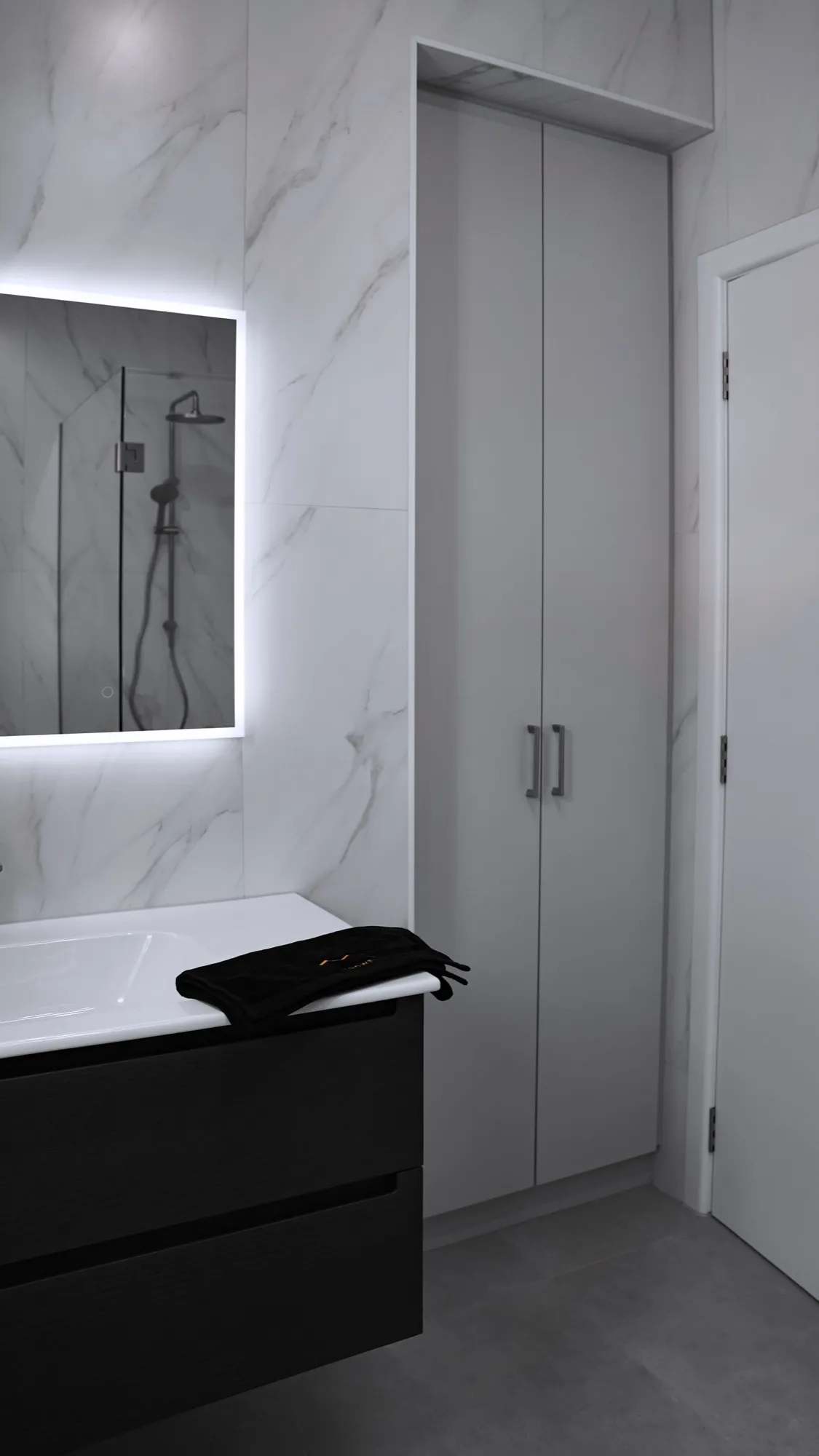
The Pre-Construction Agreement is where the whole job gets worked through, front to back, inside and out, so that what you’re expecting is what’s actually documented. That’s the real deliverable. Not a number, an understanding.
Foreseeable and unforeseen
Yes, it costs money. It also saves money in variations, which is the part that gets missed.
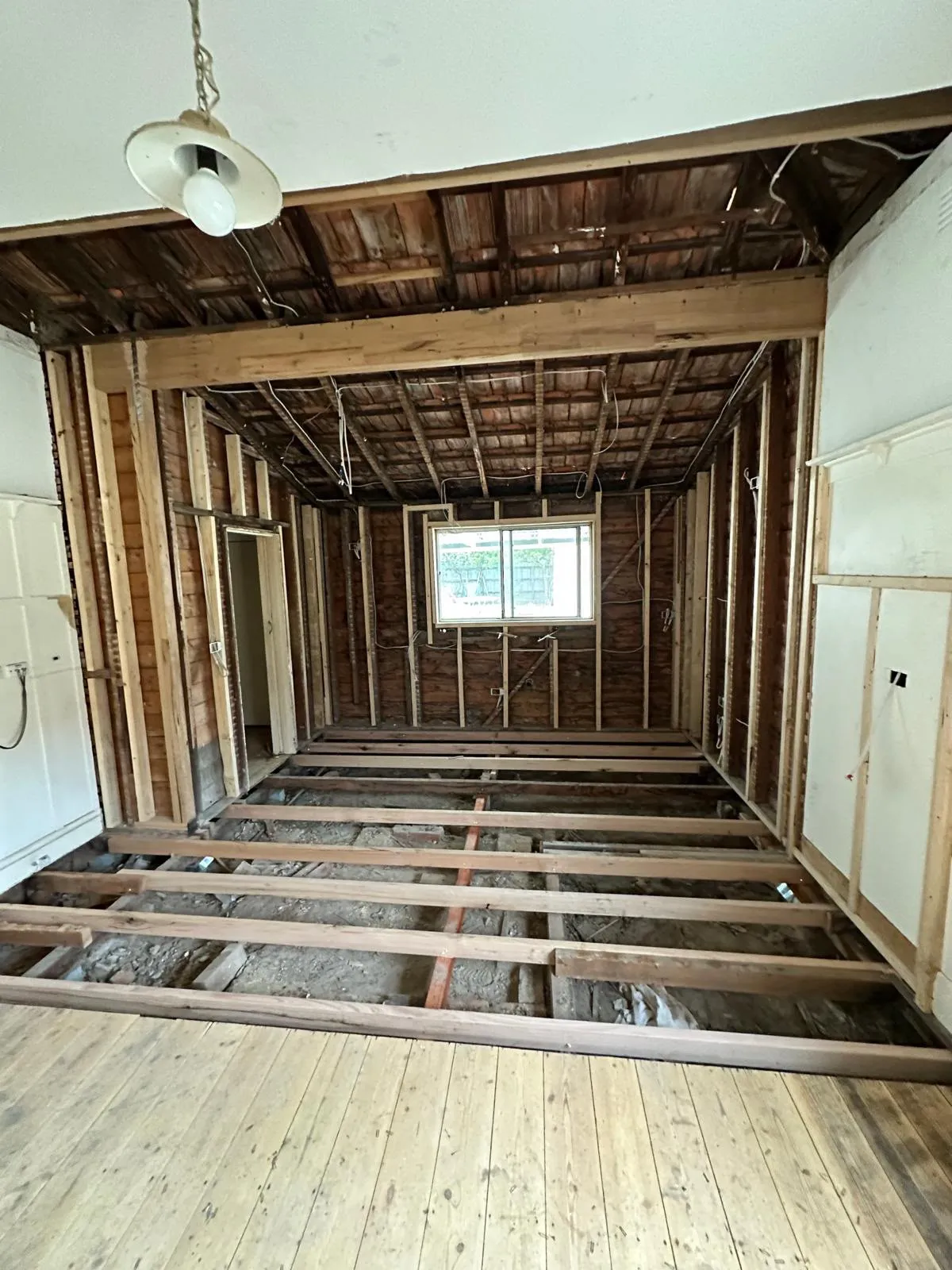
A good builder investigates properly and designs out the foreseeable variations before the contract is signed. Some things are genuinely unforeseen, and nobody can promise otherwise. What’s behind a wall in a 100 year old house is sometimes a surprise to everyone, which is exactly the kind of thing that turns up in structural wall removals.
But the foreseeable ones should never be surprises. Fewer surprises means less financial stress on you, and a project that finishes close to where it started.
Not every job runs the full process
Worth saying plainly, because it puts people off unnecessarily. The OPC and PCA sequence is built for renovations, extensions and alterations. It isn’t applied to everything.
Rectification and structural work, including wall removals, water ingress, and balcony or facade problems, is assessed individually, because those jobs start with diagnosing a cause rather than pricing a design. Maintenance work is different again.
If you’re not sure which applies to you, that’s exactly what the free call is for.
Who this isn’t for
This process isn’t for everyone, and that’s fine.
If you’re after a quick square metre rate, we’re not it. If you want a fast, rough build so you can move on, we’re not it. If you’re flipping a property and you just need the cheapest quote, we’re not the right builder for you.
And if you’re getting three quotes to pick the lowest, be aware of what you’re comparing.
“We won’t be the lowest, because we’re pricing the real job.”
Patrick McDowell
If a paid scoping step still feels like too much before you’ve decided whether to proceed at all, that’s a reasonable position. Book the free call anyway. It costs nothing to find out where you stand.
Who it is for
Homeowners who want to get it right. People who are happy to work through the detail up front so that nothing gets missed, and who would rather know the real number early than a comfortable one now.
The goal is simple. When you walk into your finished home, it’s what you thought you were getting. Not a disappointment you only find out about at handover.

Frequently asked questions
Does McDowell Building & Construction offer free quotes?
No. Every project starts with a free 20 minute discovery call, but McDowell doesn’t provide instant free quotes. For renovation and extension projects, an Opinion of Probable Cost is prepared for a fixed fee from $495 including GST, giving a realistic budget range before any design work begins. Rectification and maintenance work is assessed and costed individually. The fee is what makes the number worth relying on, because there is only so much detail anyone can put into work they are not being paid for.
What happens on the free discovery call?
It’s a 20 minute conversation about what you’re planning: the property, the scope, your timeframe and your budget. At the end there’s a clear next step, which is either an Opinion of Probable Cost, a Pre-Construction Agreement if the project is already well developed, or an honest answer that McDowell isn’t the right fit. There’s no cost and no obligation to continue.
Why won’t you give me a square metre rate?
Because it prices the size of a job and ignores most of what drives the cost. A square metre rate can’t account for cathedral versus flat ceilings, the cladding, the number of windows and doors, the kitchen, the level of finish, site access, or whether a mains power upgrade is needed. The same extension on an outer suburban block with access all the way around is a different job to the same extension on an inner city site you can only reach from the front. Same floor area, different logistics, different cost.
What is an Opinion of Probable Cost?
The OPC is an early stage budgeting tool, from $495 including GST. It provides a realistic cost range for a project based on the site, any available plans, and comparable completed work. It is not a fixed quote. Its purpose is to establish whether a project is financially viable before anyone spends money on detailed design or documentation.
What does the Pre-Construction Agreement actually deliver?
It’s where you find out what your project will genuinely cost, before being locked into a contract. It produces a full scope of works, real pricing from trades and suppliers, and a proposal detailed enough to move into a fixed price building contract. It’s also where the whole job is worked through front to back, so that what the homeowner is expecting matches what has actually been documented.
What if the detailed proposal comes back over my budget?
That’s what the stage is for. If the budget is $500,000 and the proposal comes back at $560,000, the scope is worked through together to bring it back into range. Having that conversation before a contract is signed is considerably better than having it during construction.
Does the process actually save me money?
It saves money in variations. A proper investigation designs out the foreseeable variations before the contract is signed. Some things are genuinely unforeseen, particularly in older homes where nobody knows what’s behind a wall until it’s opened. But the foreseeable ones shouldn’t be surprises, and fewer surprises means less financial stress across the project.
Will I get a line by line cost breakdown?
No. Proposals are prepared as construction contracts rather than itemised quotes: a detailed scope with clear inclusions and exclusions, at one agreed price. Itemised pricing invites individual line items to be shopped elsewhere, which creates gaps in accountability once construction is underway.
Not sure where your project stands?
Start with a free 20 minute discovery call. No cost, no obligation, and you’ll come away knowing what your project realistically involves and what the right next step is.